

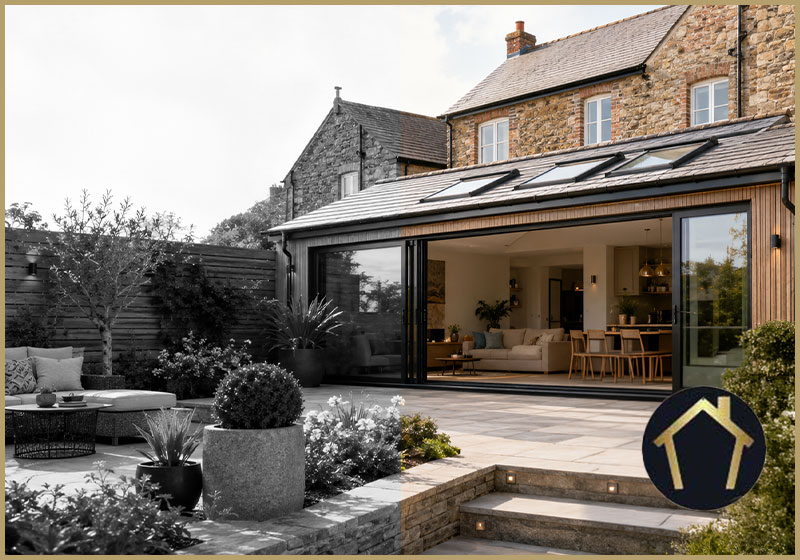
Home extension cost Cornwall: quick answer
A typical home extension cost in Cornwall in 2026 can range from around £1,800 to £3,500 per square metre, depending on the size, specification, access, ground conditions and design complexity.
That means a small house extension may start from the lower tens of thousands, while larger single storey extensions, kitchen extensions and double storey extensions can move well into six figures.
The final cost will always vary depending on the property, the builder, the materials, the planning route and the level of finish desired.
Average home extension costs in Cornwall in 2026
These rough estimates are useful for early planning, but they should not be treated as fixed prices.
| Project type | Typical size | Rough estimate |
|---|---|---|
| Small single storey extension | 10 to 15 square metres | £25,000 to £55,000 |
| Medium single storey extension | 20 to 30 square metres | £50,000 to £105,000 |
| Kitchen extension | 25 to 35 square metres | £65,000 to £130,000 plus |
| Double storey extension | 40 to 60 square metres | £80,000 to £180,000 plus |
| Garage conversion or small project | Varies | £15,000 to £45,000 plus |

Most extensions vary depending on several factors, so the actual costs can be higher or lower.
The first step is to understand the floor area, the quality of the finish and what work is needed before the build begins.
House extension cost by project type
Single storey extensions

Single storey extensions are one of the most common ways of adding space to a house.
They are often used for kitchen diners, utility rooms, larger living rooms, garden rooms or open plan family space.
For a Cornwall extension, expect the cost to be influenced by access, foundations, drainage, glazing, roofing and internal finishes.
Double storey extensions
Double storey extensions often cost more overall, but they can create more value per square metre because the same roof and foundations support extra floor area.
A two storey extension can be ideal for adding space downstairs and bedrooms or bathrooms upstairs.
Planning permission is more likely to be needed for double storey extensions, so allow time for design, drawings, fees and possible delays.
Kitchen extension cost

A kitchen extension usually costs more than a basic living space extension.
That is because kitchens involve more plumbing, electrics, ventilation, flooring, lighting, cabinets, worktops and appliances.
Basic finishes will keep the price lower, while premium materials, large glazing, roof lanterns and structural changes can increase the budget quickly.
Garage conversions and smaller projects
A garage conversion may be more affordable than building a new extension because some of the structure already exists.
However, the final cost still depends on insulation, damp proofing, electrics, flooring, heating, windows, doors and building regulations.
If the existing garage is in poor condition, the contractor may identify that more structural work is needed.
House extension cost versus final cost
The phrase house extension cost usually refers to the build cost.
The final cost is often broader.
Homeowners should also think about professional fees, planning fees, building regulations approval, structural calculations, surveys, materials, labour costs, finishes and contingency.
A sensible contingency is essential because hidden costs are common in building work.
Annoying, yes. Surprising, absolutely not.
What affects extension cost?
Labour costs
Labour costs vary depending on the complexity of the project and the availability of skilled trades in Cornwall and the wider south west.
A good builder, contractor or renovation team may not be the cheapest quote, but the right builder should help reduce mistakes, delays and budget confusion.
Material prices
Material prices can change throughout the year.
Concrete, steel, insulation, timber, glazing, roofing materials and internal finishes can all affect the final cost.
If you want high quality finishes, expect to pay more.
Ground conditions
Ground conditions can make a big difference.
Sloping sites, poor drainage, difficult soil, old foundations or limited access can increase the amount of preparation needed before the extension can be built.
This is why two extensions with the same floor area can have very different prices.
Access and location
Some Cornwall properties are harder to access than others.
Rural lanes, tight streets, limited parking and coastal locations can all affect labour, delivery and waste removal.
Good planning helps identify these issues before they become expensive.
Design complexity
Design complexity is one of the key cost factors.
A simple square or rectangular extension is usually more affordable than a complex design with unusual angles, large openings, roof lanterns or lots of structural steel.
The more complicated the design, the more time and materials it may need.
Planning permission

Some extensions fall under permitted development, but others need planning permission.
This can depend on the size, height, location, previous extensions and whether the property is in a conservation area or subject to restrictions.
A listed building, coastal property or sensitive location may need extra care.
Building regulations
Building regulations are separate from planning permission.
Most extensions need building regulations approval to check areas such as structure, insulation, ventilation, fire safety, drainage, electrics and energy efficiency.
This is not the glamorous bit of extending a home, but it is the bit that stops the dream kitchen becoming an expensive shed with sockets.
Hidden costs to allow for
Hidden costs can include structural engineer fees, drainage changes, party wall matters, upgrades to electrics, heating alterations, asbestos checks, waste removal and making good existing rooms.
Bathrooms and kitchens usually add more cost because they involve plumbing, fittings and specialist trades.
It is better to plan for these costs early than discover them halfway through the project.
Is 30k enough for an extension?
£30,000 may be enough for a very small, simple extension or conversion, especially with basic finishes.
For many home extensions in Cornwall, £30,000 is more likely to be a starting point than a complete budget.
A larger kitchen extension, double storey extension or high specification build will usually cost more.
How much does a 3m by 4m extension cost?
A 3m by 4m extension gives around 12 square metres of new space.
Using a rough range of £1,800 to £3,500 per square metre, the build cost could sit somewhere around £21,600 to £42,000 before extra fees, finishes and unexpected work.
If the project includes a kitchen, bathroom, major structural work or difficult access, the cost can rise.
Can I build an extension for 20k?
It may be possible to complete a small conversion or very basic project for around £20,000, but a full new extension at that budget is likely to be limited.
For most homeowners, affordability depends on keeping the design simple, the specification realistic and the scope clear.
The cheapest route is not always the best route if it creates problems later.
Is a 3 metre extension worth it?
A 3 metre extension can be worth it if it creates useful space and improves how the house works.
For example, extending a kitchen by 3 metres can create a dining area, better storage and stronger connection to the garden.
It may also add more value when you sell, although value depends on the property, location, quality of work and buyer demand.
How to keep your extension budget under control
Start with a clear brief.
Decide what you want the extension to achieve before design work begins.
Get multiple quotes, but compare them carefully.
A lower quote may exclude essential items, while a higher quote may include more complete project management, better materials and fewer surprises.
Keep the design practical.
Avoid changing your mind halfway through the build unless you enjoy delays, extra cost and emotional corrosion.
Choosing the right builder in Cornwall
The right builder should help you understand the project clearly before work begins.
Look for experience with similar extensions, clear communication, detailed quoting and a practical understanding of local properties.
A local Cornwall renovation company can also help with access challenges, planning considerations, material choices and coordinating trades.
Get a home extension quote in Cornwall
Every extension is different.
The best way to understand the actual cost is to speak with a builder about your property, your budget and the space you want to create.
Cornwall Home Renovations can discuss your plans, explain the likely steps and help you understand what may be involved before you invest in your project.
For more information about home extensions in Cornwall, explore the Home Extensions service page or request a home extension quote through the contact page.
